Indian fruit importers and purchasing managers looking for reliable citrus supply can consider oranges from Egypt as part of their sourcing strategy. Egypt is a major orange-exporting origin, with shipments reaching markets across Europe, the Middle East and Asia. For Indian buyers, the two key varieties to evaluate are Navel and Valencia, with different characteristics and availability windows.
For importers, the buying decision should focus on variety, timing, specifications, documentation and destination requirements rather than consumer-facing considerations.
Egypt’s position in the world orange trade
Egypt remains the world’s leading exporter of oranges, according to the USDA Foreign Agricultural Service. Oranges account for more than 20% of the country’s fruit and vegetable sector’s foreign-currency earnings.1
For MY2025/26, Egypt’s orange production is forecast at 4 million metric tons, an increase of about 15%, while exports are forecast at 1.9 million metric tons.1
Egypt’s export reach is also broad. In MY2024/25, Egyptian oranges were shipped to 124 countries, with India among the leading destinations alongside the EU, Russia, Saudi Arabia, Syria, the UAE and the UK.1
This broad export base makes Egyptian citrus relevant for Indian buyers evaluating international sourcing options. An Egypt orange supply programme can be structured around the required variety and the buyer’s market window.
Oranges from Egypt to India: market position and the Red Sea effect
India is one of the established markets for Egyptian citrus. In MY2024/25 it was among the top destinations for Egyptian oranges, alongside the EU, Russia, Saudi Arabia, Syria, the UAE and the UK.1
Logistics have shaped shipments to Asia. The Red Sea disruption from November 2023 through January 2025 reduced Egyptian orange exports to Asian markets. The USDA reports that some Asian markets, including India, Bangladesh and Singapore, have since shown recovery, although a full return to normal shipping routes is still needed for complete market recovery.1
For orange importers in India, this makes seasonal planning and supplier communication particularly important. Buyers should discuss the intended market window and shipment programme with the supplier before placing an order.
Navel vs Valencia: which Egyptian orange fits your market?
Both Navel and Valencia are established Egyptian export varieties, but they have different characteristics and availability windows.
Navel
Egyptian Navel oranges have early and late types, with the late type mainly exported.1
Gaara Export lists its Egyptian Navel oranges as available from November through the end of February.2
Navel has a naturally sweet taste and seedless flesh.2
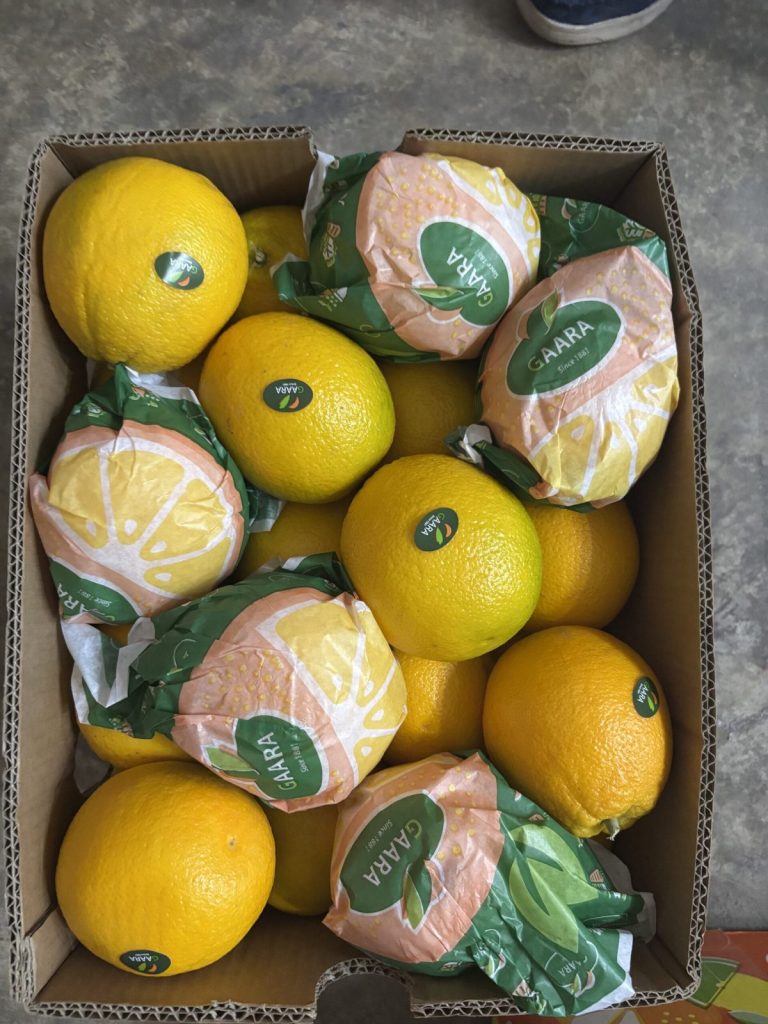
For more product information, see Egyptian Navel oranges.
Valencia
Valencia accounts for about 85% of Egypt’s orange output.1
Gaara Export lists Egyptian Valencia oranges as available from January to May, with peak availability during March–April.2
Valencia has high juice content, balanced sweetness and refreshing acidity, and is suited to juice and fresh markets.2
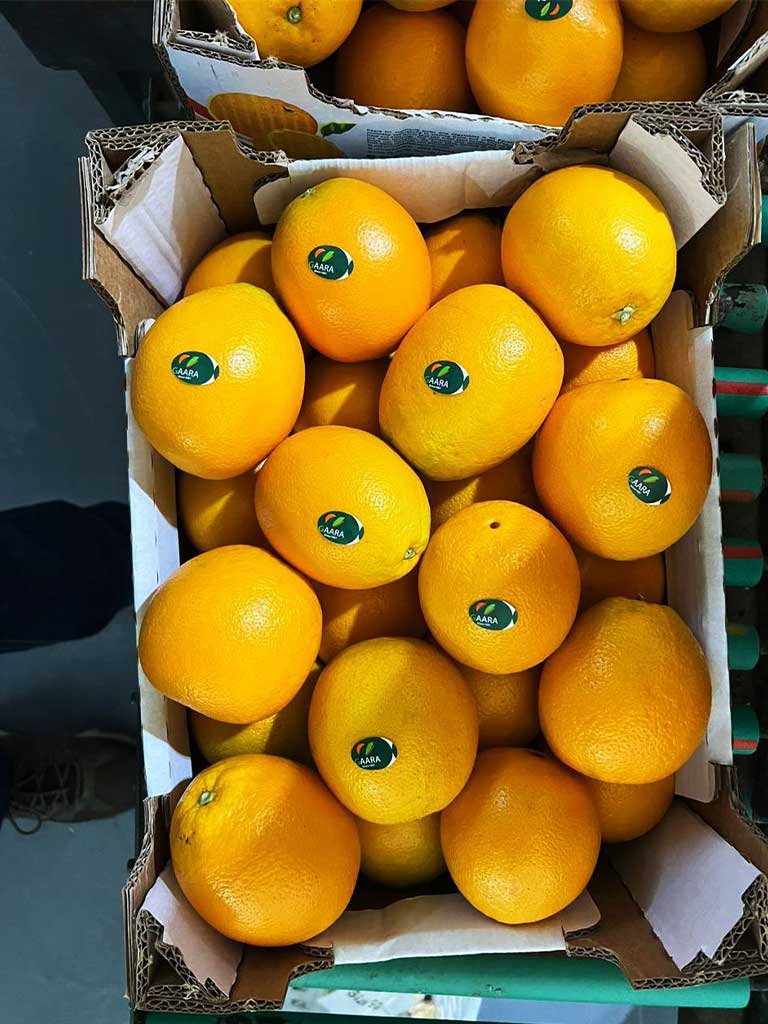
For product details, see Egyptian Valencia oranges.
The right choice depends on the buyer’s market, sales programme and required delivery window. A supplier can confirm the available variety and specifications for each order.
Season calendar for Indian buyers
Egypt’s orange harvest starts in late November and can continue through September, depending on variety.1 The MY2025/26 Egyptian orange export season officially started on 15 December 2025.1
For Indian buyers, the practical approach is to plan procurement around the variety rather than treating the Egyptian orange season as one uniform window.
Navel is available from November through the end of February through Gaara Export, while Valencia is available from January through May, with peak availability in March–April.2
Importers can therefore discuss seasonal programmes in advance and align expected demand with the relevant variety window.
For more background, see when oranges are in season in Egypt.
Quality, traceability and certifications
Traceability is an important consideration when purchasing Egyptian citrus for an international supply programme.
The Agricultural Export Council (AEC) and the Central Administration of Plant Quarantine (CAPQ) enforce a traceability system that registers and codes export farms.1 This provides a formal framework for identifying farms involved in agricultural exports.
Gaara Export states that its certifications include SMETA, GRASP, GLOBALG.A.P., ISO 9001:2015, EGAC and IAF accreditation.2
For Indian purchasing teams, these systems and certifications should be considered alongside the specific documentation and destination requirements applicable to each shipment.
Buyers should also confirm India’s current import requirements with their customs broker before shipment, as destination requirements can change.
What to confirm before your first order
Before committing to a first shipment, an importer and supplier should agree the commercial and technical specifications in writing. These should include:
- Variety: confirm whether the programme requires Navel or Valencia.
- Count and size: agree the required specifications per order.
- Packaging: agree the packaging format and presentation per order.
- Shipping terms: agree the applicable commercial and shipping terms per order.
- Documents: confirm the documents required for the shipment and destination.
- Destination requirements: confirm the requirements applicable to the Indian destination before shipment.
These specifications should be agreed per order rather than assumed from a general product description.
Indian buyers should also confirm current import, customs and plant-health requirements with their customs broker and relevant authorities before finalising a shipment.
Why source from Gaara Export?
Gaara Export supplies fresh fruit, vegetables and IQF frozen produce to international buyers, including importers, distributors, retail chains and government buyers.
For orange procurement, the company offers both Navel and Valencia, with product-specific availability windows. Buyers can review the company’s stated certifications and quality information in the relevant product and company materials.
Indian purchasing teams can review the Egyptian Navel oranges and Egyptian Valencia oranges product pages before discussing their requirements.
For broader information about the Egyptian market, Gaara Export also publishes an Egypt orange market outlook.
Request an orange export quotation
Indian importers and purchasing managers can discuss their Navel or Valencia requirements directly with Gaara Export. Share the required variety, specifications, packaging, destination and other order requirements so the commercial details can be agreed per order.
Contact Gaara Export for a quotation.
Sources
- 1 USDA Foreign Agricultural Service, Egypt Citrus Annual, Report EG2025-0031, 17 December 2025 — apps.fas.usda.gov/newgainapi/api/Report/DownloadReportByF…
- 2 Gaara Export, Navel and Valencia product information and company certifications — gaaraexport.com/product/navel-orange/ · gaaraexport.com/product/valencia-orange/